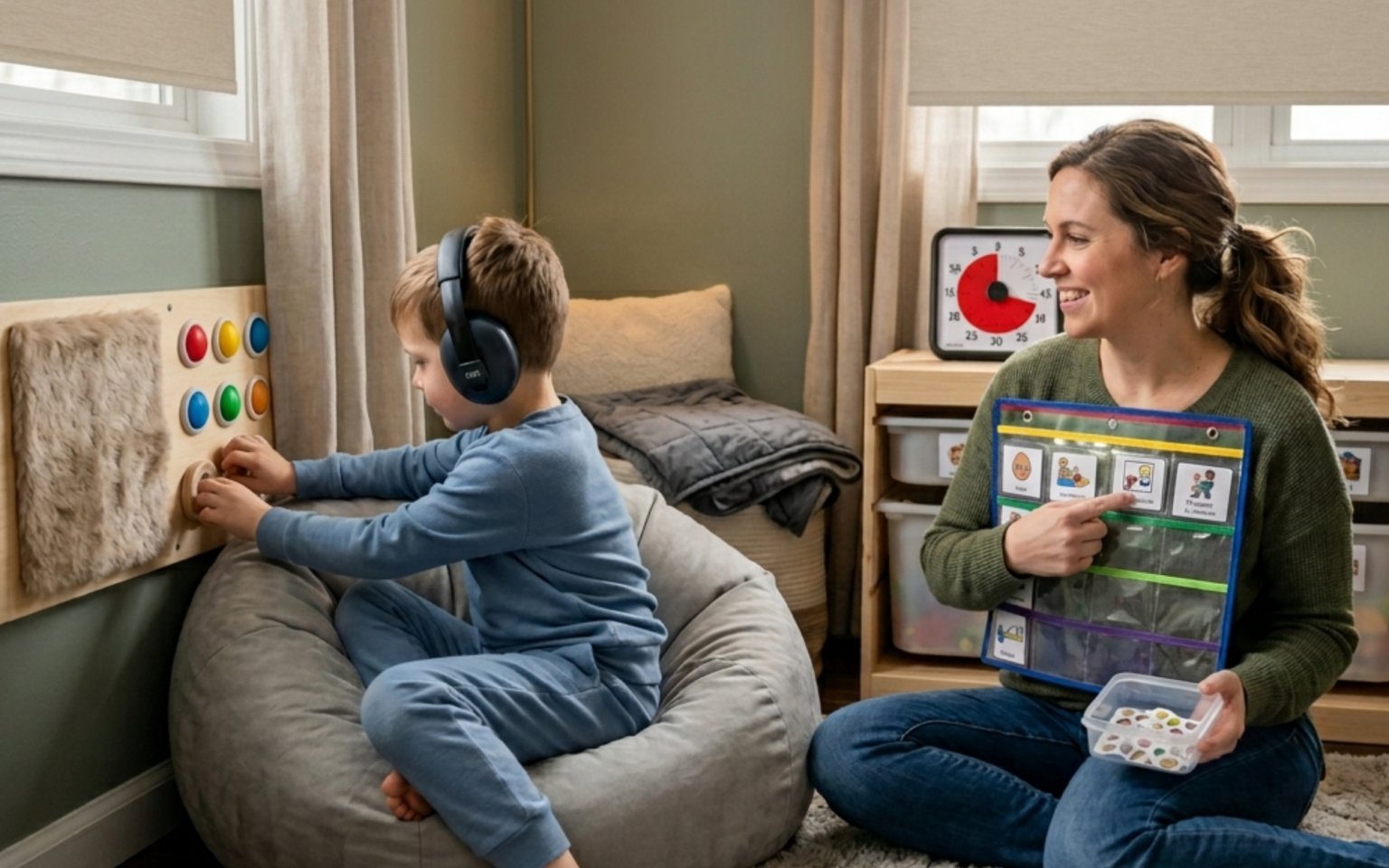
1. The Crucial Need for a Low-Stimulus Home Environment
After enduring a long day of high-demand professional, social, or public interactions, your nervous system requires a truly restorative physical environment to process accumulated fatigue and reset. If your home is cluttered, brightly lit, and filled with background noise, your brain cannot fully unwind. Designing a dedicated personal sanctuary at home provides an essential retreat where communication demands drop to zero, allowing your inner reserves to replenish completely.
2. Managing Lighting, Acoustics, and Sensory Clutter
Transform a specific corner or room in your living space into a low-stimulus sanctuary by making intentional adjustments to lighting and sound. Replace harsh overhead fixtures with warm, dimmable lamps or soft string lighting. Incorporate acoustic soft furnishings—such as heavy curtains, plush rugs, and acoustic wall panels—to absorb outside street noise and indoor echoes, creating a serene, peaceful acoustic bubble.
3. Establishing Daily Sanctuary Time Without Digital Interruptions
Commit to spending 30 minutes to an hour inside your personal sanctuary every single day with all digital screens, phones, and notifications turned completely off. Use this quiet window to read, meditate, journal without worrying about sentence structure, or simply sit in absolute silence. Protecting this daily sanctuary habit anchors your emotional stability and builds profound resilience against burnout.